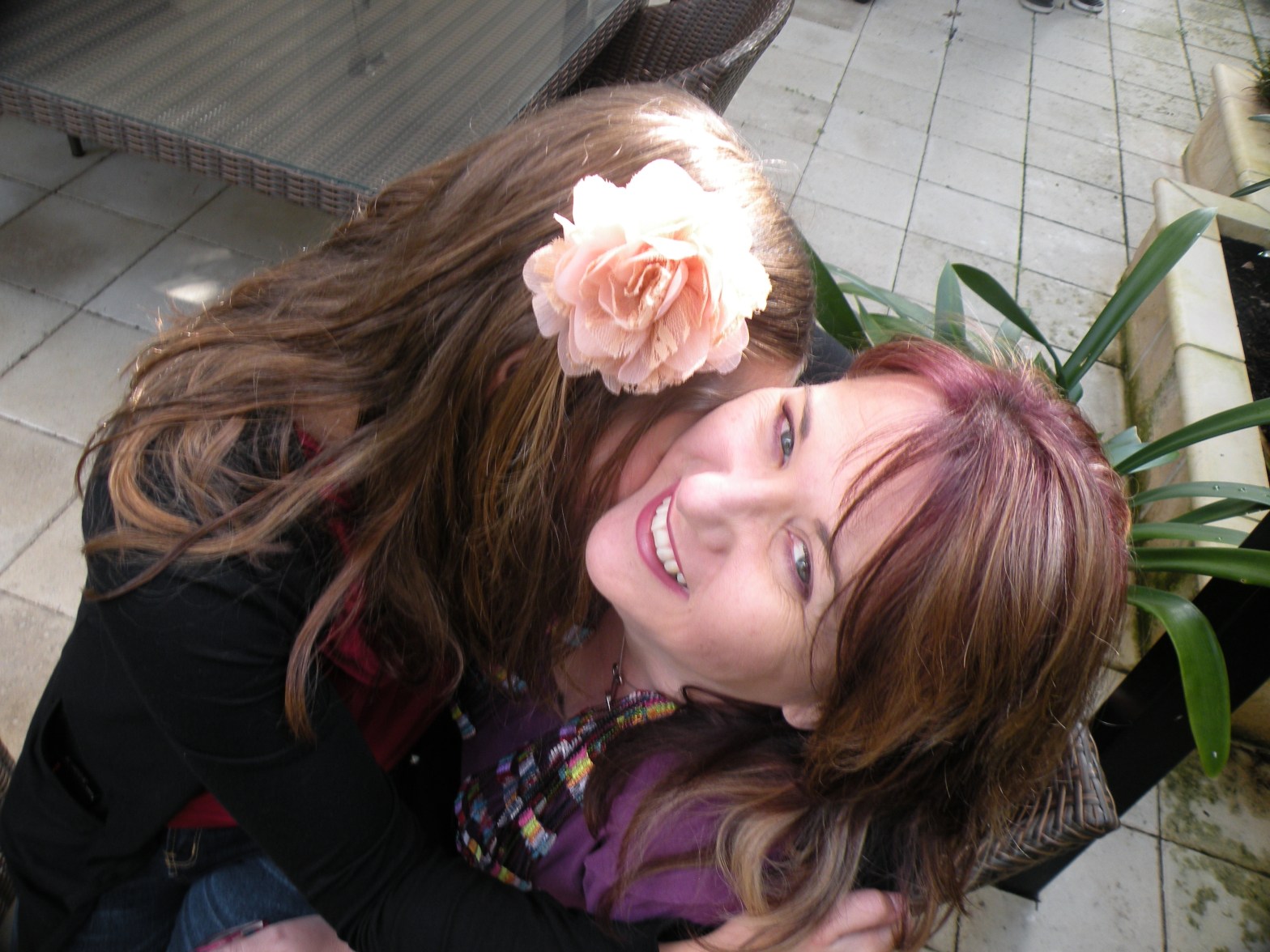
There’s a universe in which my mum grows old and one day walks me down the aisle, or teaches me to drive, or watches me get ready for my first day of university, or meets her grandchildren. This is not that universe.
My mum took her own life when I was fifteen years old, and in some regard it feels like she forfeited her right to those things. Ever since her death I have spoken about what it was like to lose her, to lose someone because of their own decision. The discussions that have surrounded the loss of my mother have always been about the grief and her death, but there is something else that I want to discuss. There is another angle, a gap in the story that I need to fill.
What it was like to grow up with, be raised by, and live with someone mentally ill and suicidal.
I started to talk about it in my podcast appearance for YMCA WA (which you can find a link to on my portfolio page), but it is something that I do want to go more in depth about because it is something that effects people around the world on a large scale and it needs to be talked about so that those people can be reached and feel less alone.
And, in all honesty, it is something that I need to talk about, because for six years it has felt like I have only been telling half the story.
I have been talking about the hurt that she left behind, but I wasn’t talking about the hurt that was there long before her death. I was talking about the nights I cried myself to sleep because I missed her, and not the nights I cried myself to sleep locked in my room because Mum didn’t know how to deal with her own feelings, let alone mine. I was talking about how I felt emotionally cold at points during my grief, but I never mentioned the physical cold I felt on the nights that I was forced to sit in the front garden until she felt calm enough to let me in again. I spoke of the physical pain that my body dealt with when she died, but not the emotional pain I felt daily because I never knew what version of my mother I would get day after day.
One of the biggest things that my mum would do while my younger brother and I were growing up, was undermine and discredit us when we asked for help. More than once I rang my grandparents and asked them to come and pick us up because Mum had lost her temper on an unbelievable scale and there was no way on earth that we would be able to calm her down, and she was terrifying us. We begged our grandparents to come and get us, we told them how scared and upset we were, and we promised them that we hadn’t done anything wrong- and it was true- only for them to ask our mum for her side of the story. Every time, without fail, Mum told them that we had misbehaved or not done our chores and were scared of consequence, or that we were just exaggerating to get ourselves out of trouble. Our asking for help made things worse, and by the time I turned twelve I stopped reaching out.
I have had to come to terms with a lot since my mum died, I have had to understand that many experiences that I had growing up are not a universal experience. I learnt that most children have a bedtime, whereas my mum was often too sad or tired and went to sleep long before I would. I stayed up so late sometimes that I would be watching the Late, Late Show before crawling to bed at 11pm when I was still a primary school student.
The first time I realised that my childhood was different to the majority was when I was sitting in my primary school class towards the end of the day. Parents were starting to arrive and wait outside, and we could see them through the window. As always, we were all peeking, trying to work out who was there to pick us up- if anyone, because some of us would walk. One of the girls in my class caught sight of her grandparents and she was clearly excited as she whispered within earshot that she was going to be spending the afternoon with her grandmother and her grandmother’s little dog. I was still trying to see if my mum’s silver Camry was parked on the street or if I was going to have to collect my brother and walk home, when I saw my own grandmother standing near my bag. I didn’t share my classmate’s excitement, my heart sank into my shoes, I gave my grandmother a small smile through the window, and I went back to the classwork. If my grandparents were picking me up, then my mum was in hospital again.
My mum was in and out of hospital a fair few times throughout my younger years, from as young as I can remember until her last admittance in 2012. I have never asked if all of her hospital visits were psychiatric based, or if what she told us about back pain and a hysterectomy, and other such stories, were true. I have come to learn that my mum lied to us, a lot.
Do you know what it’s like to not know the ‘story of your birth’? I asked my mum, a few times, what the day of my birth was like. She told me pretty much the same story every time, but when I asked my dad and my grandparents if it was true or for their version of the day, the story never matched up. My mum’s mental illness caused her to remember things differently, I am aware of this concept, but I can never be sure if she just remembered things differently or if she was just flat-out lying. It wasn’t until the later years of her life, the older I got, that I started to realise she was lying more and more. However, it was after her death that I learnt the sheer extent of her lies and that they weren’t just to me and my younger brother, but she lied to everyone. She always lied to try and protect herself, or to protect the lies she had already told, and I don’t really believe that any of her lies were mean-spirited, she just dug herself into a really deep hole trying to pretend that everything was okay. She liked to tell me ‘oh what a web we weave, when we practice to deceive’ which I knew she had heard elsewhere, but I think it’s something she would also be telling herself.
It wasn’t just her lies that were a problem, it was the liar she turned me into. I was conditioned young to protect my mum, to make sure that no matter what, all her secrets were safe with me. She told me things that a child should never know, and I was always told ‘you can’t tell anyone this my darling, not even your dad or gran and granddad.’ So… I didn’t, but that often meant telling people lies, or hiding important things from people. I told people that everything was fine, that there was nothing weird or upsetting with Mum. I played happy families, I played games of ‘you never know what’s happening behind closed doors’, and I tried to protect my mum at all costs, even if I knew that it would be detrimental to me. I had already given up my innocence and my childhood by the time I turned ten, even though I was playing ‘house’ every day of my life- pretending to be a parent. Lying was a hard habit for me to break, and even now I catch myself fighting my instinct to lie for no real reason.
My mum, who had severe fears of abandonment, villainized my father. I love my father, I always have, but because of the lies and the way she framed the stories she would tell us, she turned my father into the antagonist of our story. I was scared of him, I was scared he would take us away from her, and I believed that he couldn’t know anything. I had to keep him in the dark. ‘Don’t tell your father’ was a staple sentence in my mother’s household growing up. My parents divorced when I was two, I have no memory of them together, and I can never even imagine the two of them loving each other.
My dad is a better man than my mum made him out to be, and he has been my rock in recent years.
My dad is also a much better man than the men my mum brought home while I was growing up. A woman with such low self-esteem and a low belief in her own self-worth was a woman that bought home, and attracted, men who were undesirable, compulsive liars, and oftentimes abusive.
It wasn’t always men that she was dating that would come home with her. More than once I lost my bedroom to women she had met in psychiatric wards. Her friends who were recovering, or needed a safe place to live after being discharged from the hospital, or women who were lost and scared who she had to protect. They lived in my room and I slept in my mum’s bed with her. These women never treated me or my family wrongly, and some of them still check in on me from time to time. I do not grudge them for taking my room, and I do not hold ill will against them because they needed somewhere to live, I loved these women. I was just introduced fairly young to concepts of domestic abuse, addiction, self-harm and suicide. I also developed an unhealthy dependence on my mum and sleeping next to her to sleep properly for quite some time.
My childhood shaped who I am today, as it does everyone, but I am still learning how that is. It turns out I wasn’t born with my ‘mother-hen’ nature, and my calm in emergency situations, and the difficulties I face when trying to maintain relationships and friendships, are all learned habits from my childhood.
Of course my upbringing wasn’t all terror, lying and protecting from a young age. My memories are shrouded with all of the negativity and the sadness, but there will always be the good memories. Spending days with her at the beach and falling asleep in the car on the way home, only to curl up with her and watch movies for the rest of the evening. The sausage casserole that she would make, that no one else has been able to recreate, and the honeycomb cheesecake that no one in my family will even dare try to make again. How, when she was happy and well, she always knew what to say to make you feel better. The fact that she always smelt really nice, and even when she was unwell, she always dressed or accessorised with beautiful, vibrant colours. On good days, my mum would open up all the windows and doors, blast the music she loved and that we grew up with, and we would dance around the house until we collapsed on the couch in giggles. She was a beautiful, amazing, complex, unwell, misguided, kind, lost and hurting soul.
My mum was my best friend. I will grieve her death every year, and I will harbour my hurt and my relief and my despair and my love for the rest of my life.
If you, or anyone you know is suffering, there are people who can help you!
- Lifeline Australia- 13 11 14
- Suicide Callback Service- 1300 659 467
- Beyond Blue- 1300 224 336
 Rae's Rambles
I’m not a massive reader and I found myself so sucked in and this is a side to a story that isn’t spoken about a lot and you never hear about the effects of before. I’m so proud of you for writing this and being the person you are today. Without some of your words I know I’d be struggling a lot more. I love you never stop doing what you love!
LikeLike
Thank you so much 🥰🥰 your support has always meant the world xx
LikeLike
Touching….and deeply emtional
LikeLike
Thank you 🥰
LikeLike